
How to read sunglasses measurements and check frame fit
Decode lens width, bridge width and temple length with a 54–18–145 example, then check overall width, nose comfort and stability.
The three numbers on a glasses arm usually describe lens width, bridge width and temple length, in millimetres. They are a useful starting point, but they are not a complete fit guarantee. Frame shape, hinges, nose support and curvature can change how two pairs with the same numbers feel.
Start with a pair you already wear comfortably. Record its printed size and what you like about the fit, then use that information when comparing another frame. A familiar reference is more useful than relying only on a “small”, “medium” or “large” label.
What does 54–18–145 mean?
You might see 54 □ 18 145 printed inside a temple, with a square or dash separating the first two values. Here is how to read that example:
| Marking | Measurement | What to compare |
|---|---|---|
| 54 | Lens width: 54 mm | The width of one lens, rather than the whole frame front. |
| 18 | Bridge width: 18 mm | The labelled spacing between the lenses. Nose support also depends on bridge design. |
| 145 | Temple length: 145 mm | The manufacturer’s length for the side arm. Its shape and bend also affect comfort. |
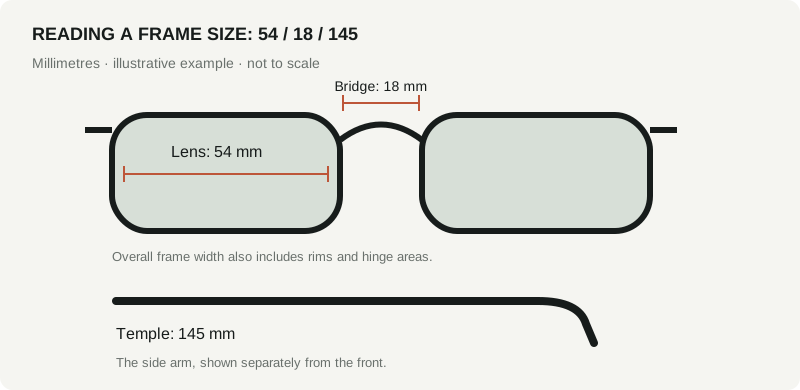
Frames may also carry a model number, colour code or additional size information. Check the manufacturer’s size chart if the marking is unclear; not every printed number is a measurement.
Why overall frame width matters
Overall width includes the frame front and its outer edges or hinges. The lens and bridge numbers do not include every part of that structure. A thicker rim, wider hinge area or different curve can make a noticeable difference.
In the example above, 54 + 54 + 18 equals 126 mm. That is not a reliable calculation of the complete frame width. It adds the lens and bridge measurements but leaves out other structural parts. Ask for overall width if a listing only provides the three printed numbers.
When comparing with your existing pair, use the seller’s stated measuring method. A straight measurement across the front and a measurement following a curved frame are different. Avoid treating measurements taken by different methods as exact equivalents.
Five fit checks you can actually use
- Check side pressure. The temples should not create uncomfortable pressure at the sides of your head. A frame that feels secure only because it squeezes may not remain comfortable.
- Check nose support. The bridge or nose pads should support the frame without a painful pressure point. Two bridges with the same labelled width can sit differently.
- Check stability. Look down and turn your head gently. Note whether the glasses keep sliding, rather than assuming a larger or smaller lens number will fix it.
- Check clearance. Look for contact between your eyelashes and the lenses, or between the lower frame and your cheeks when you smile.
- Check behind your ears. A temple’s bend and adjustment matter as well as its length. Persistent pressure or instability is a reason to ask an optician for help.
Do not force, heat or sharply bend a frame to make a poor fit work. Materials and hinge designs differ, and an adjustment that is safe for one frame may damage another.
A practical way to compare an online listing
Make a short note for your current pair: printed size, overall width if available, bridge style, and any comfort problems. Then collect the same information for the candidate frame.
Suppose your current marking is 52–18–140 and the candidate is 54–18–145. The candidate has a larger labelled lens width and a longer temple. That does not establish its total width, where it will sit on your nose or whether it will stop slipping. Ask about those missing details before treating it as the right size.
Check real product photographs, the complete size chart and return terms. A face-shape suggestion can help with style, but a photograph or virtual try-on cannot confirm physical comfort. Prescription lenses may also require measurements and fitting advice from an optical professional.
Common questions
Is bridge width the same as nose fit?
No. It is one dimension. Bridge height, shape and nose-pad design also affect where the frame sits and how it feels.
Does a larger lens number always mean a wider frame?
No. It describes the lens, while overall frame width also depends on the rim, bridge and hinges. Compare the complete dimensions.
Do these numbers include pupillary distance?
No. Pupillary distance is a separate measurement used in positioning prescription lenses. Do not substitute a frame size for a prescription fitting measurement.
Comfort is one part of choosing sunglasses. Also check UV protection and polarization, and keep the lenses and nose-contact areas clean with an appropriate care routine.
Source and further reading
- All About Vision: how to measure glasses, covering common size markings and frame dimensions.
The numerical examples illustrate how to compare measurements. They are not confirmed specifications for the concept frames shown elsewhere on this site.
← Back to field notes